
Welcome to the Substack
A quick intro to me and what I'm hoping to do here

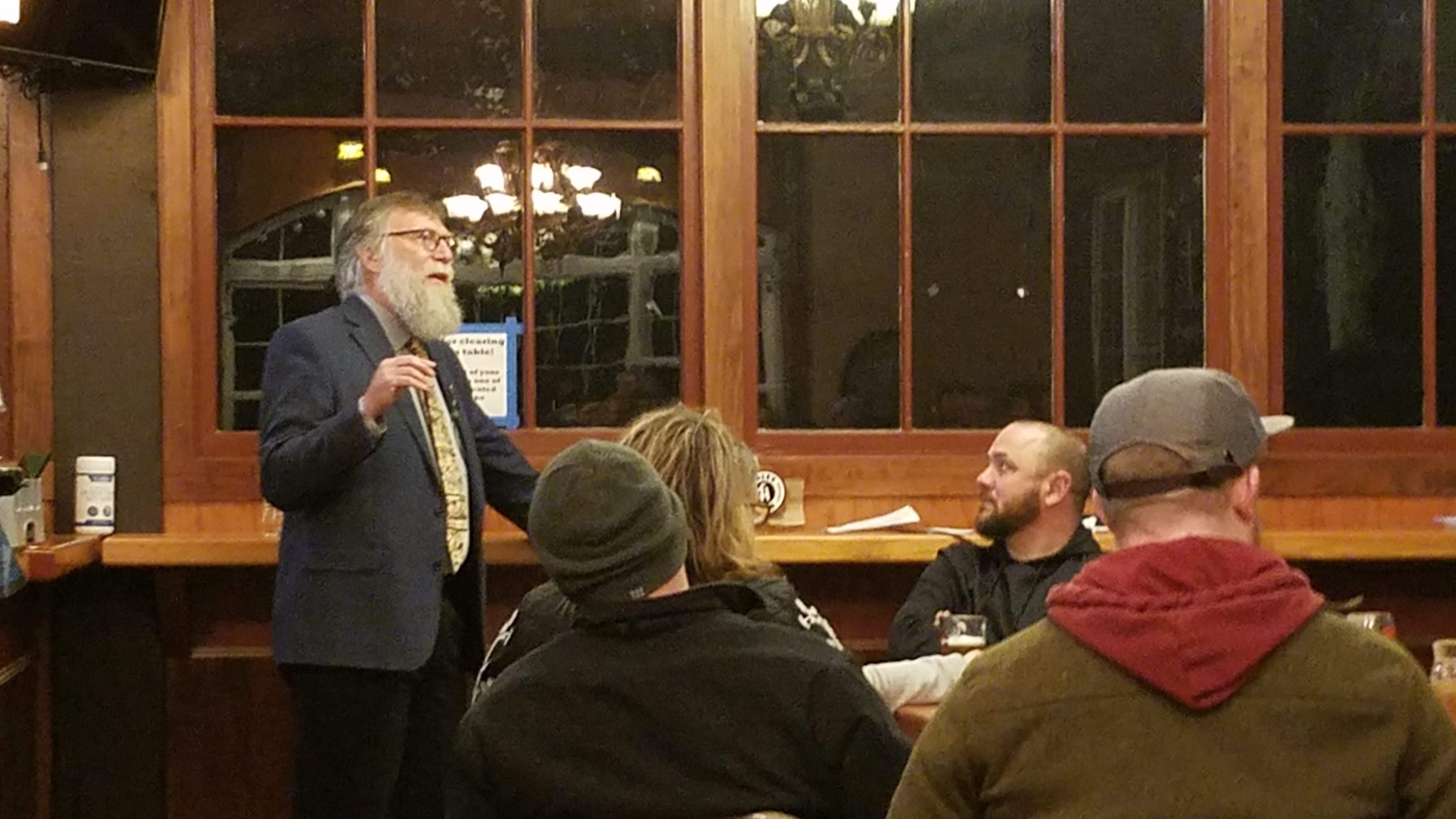
My Story
For those of you who don’t know much about me, let me explain how I got here. I’ve been an academic for most of my adult life. I’m not going to bother with all the degrees, but the important one was a Ph.D. in Renaissance and Reformation History with subfields in Medieval History from the University of Wisconsin-Madison. I spent 29 years as a history professor while also teaching Bible studies at my local church. In the midst of that I was recruited by Chuck Colson to teach in a program he was starting called the Centurions (now the Colson Fellows), a worldview and teaching program. This shifted my focus from history toward ministry even though it would be 17 years before I left the university.
I retired from university teaching in 2021 to put my focus on writing and teaching in my own ministry (Every Square Inch Ministries, www.esquareinch.org), and working for Reflections Ministries with Dr. Kenneth Boa and for the Colson Center for Christian worldview. I was originally fulltime at Reflections, but this has been cut back to an hourly position. This has freed me up to do more things with Every Square Inch.
Why this Substack
So far, most of my writing has gone on the blog at Every Square Inch Ministries (aside from two monthly Breakpoint commentaries). I signed up for Substack years ago but hadn’t done anything with it. But I’ve suddenly begun getting people subscribing and asking questions here, and if they’re going to do that, it’s only right that I begin providing content for them.
I’m planning on sharing blog posts and video that I produce for my website (weekly and occasionally more than that) plus writing posts specifically for the site on things that I am thinking about and working on.
So what am I working on?
I have been asked on several occasions what I think is the most pressing issue facing the church. My answer is that the church has become disenchanted. In other words, we see the universe as meaningless, as just stuff devoid of any larger significance. And along with that, we’ve adopted a secularized version of the Gospel that sees it in terms of personal salvation and personal morality or in terms of politics, not the broader vision of the Kingdom of God that Jesus taught. Add to that that we really do not have a supernatural worldview anymore—our anemic prayer life demonstrates that.
With this in mind, the church needs a reenchanted worldview. This is a popular topic in some circles today, though not so much in the Reformed and evangelical circles I have been part of.
What is involved in a reenchanted worldview?
A sacramental vision of the world, recognizing with the biblical authors that the world is shot through with spiritual significance;
A recognition of the reality of the invisible world of angels and demons (and possibly other beings) and its interpenetration and interaction with the visible world;
A deep connection to the historic traditions of the church. This may seem out of place for a Protestant, but there are several reasons why this is important:
Tradition is not authoritative in itself, but it is an expression of the faith that developed before the world was disenchanted. It thus can help us connect to a more enchanted vision of the world;
Our history is a critical element of our identity, and thus engaging with traditions helps us recognize that we belong to the same people of God as believers in all generations and helps us understand our identity as Christians;
In particular, the church year is a means of sacralizing time as we rehearse salvation history through the fasts and feasts that take us from the Old Testament longing for the Messiah (and our longing for his return) through the Incarnation, Christ’s life, death, resurrection, and ascension, the sending of the Spirit, the church, and ending with Christ the King Sunday, anticipating the consummation of the Kingdom. Following this pattern annually helps embed the story in our mind and can shape how we see time and this world;
Lastly, an observation: all churches have traditions just as all churches have liturgies. I’m arguing that there is more value in the time tested and time honored traditions in the church than in the more recent (and more shallow) traditions that many churches follow today.
A spirituality that engages the whole person, incorporating both reason as the natural organ of truth and imagination as the natural organ of meaning (quoting C.S. Lewis there);
A commitment to Scripture that recognizes that the literal, rational sense of the text is important, but so are symbolic and allegorical interpretations of the sort that Paul uses in Galatians or that Jesus uses when he says the Old Testament scriptures speak of him;
A life of prayer, including not just requests, but worship, praise, thanksgiving, confession, and contemplation;
An openness to God doing the unexpected, including miracles (a fact documented by Craig Keener in several of his books);
A faith that recognizes and lives out the lordship of Christ in every area of life.
So these are the sorts of things I will be writing on, though don’t be surprised if other unrelated issues also come up. I should add that I’m hardly an expert at all of this—it is, after all, what I’m working on—and I’ll welcome responses, comments, suggestions, and challenges. And if you’d like to give me feedback on what you’d like me to write about, there’s a survey here.
If this sounds interesting, welcome aboard.
Glad to have found you here on Substack! I discovered you in the Colson Fellows program and am looking forward to your content here. If this article is any indication of the caliber of thinking on the issues facing today’s church, we will all be blessed by your incisive and clear commentary, especially regarding re-enchantment and church history.
My training at the Fellows program (2018-19) focused more on apologetics, but in the years since then, the topic of re-enchantment has come to the fore of the church. And I’m glad for it! I couldn’t agree more that the lack of prayer (stemming from the absence of training/modeling how to pray) and emphasis on developing a holy imagination have been catastrophic to the health of the church. Someone who has an active prayer life and regular engagement with God, grounded in reason and truth, of course, is very unlikely to walk away from the faith. We’re desperately in need of people to teach us how to pray!
A ray of Sunshine in the Substack- glad to follow you here. I appreciate the perspective on tradition sorely needed in the non-denominational evangelical community- the need to be ever reforming is well known, but your point about reenchantment is right on. To my evangelical friends considering orthodoxy (Catholic or Eastern), Protestant history has epic roots unrivaled and amazing in the history of Christian Missions that are a treasure trove. Keep up the good work Glenn - would love to connect with you at some point.